-
Table of Contents
- Reconstitution Protocol for Trestolone: A Comprehensive Guide for Researchers and Athletes
- What is Trestolone?
- Reconstitution Protocol for Trestolone
- Step 1: Gather Supplies
- Step 2: Calculate Dosage
- Step 3: Reconstitution Process
- Storage and Administration
- Pharmacokinetics and Pharmacodynamics of Trestolone
- Real-World Examples
- Expert Comments
- References
Reconstitution Protocol for Trestolone: A Comprehensive Guide for Researchers and Athletes
Trestolone, also known as MENT, is a synthetic androgen and anabolic steroid that has gained popularity in the world of sports pharmacology. It is known for its powerful muscle-building effects and has been used by athletes and bodybuilders to enhance their performance. However, due to its potency, proper reconstitution and administration protocols are crucial to ensure its safe and effective use.
What is Trestolone?
Trestolone is a synthetic derivative of testosterone, with a chemical structure similar to other anabolic steroids such as nandrolone and trenbolone. It was initially developed as a potential male contraceptive, but its anabolic properties were soon discovered and it became a popular performance-enhancing drug.
Like other anabolic steroids, trestolone works by binding to androgen receptors in the body, promoting protein synthesis and increasing muscle mass. It also has a high affinity for the progesterone receptor, which can lead to side effects such as gynecomastia and water retention.
Reconstitution Protocol for Trestolone
Before discussing the reconstitution protocol for trestolone, it is important to note that this drug is not approved for human use and is only available for research purposes. Therefore, it is essential to follow proper safety precautions and adhere to ethical guidelines when handling and administering trestolone.
Step 1: Gather Supplies
The first step in the reconstitution process is to gather all the necessary supplies. These include:
- Trestolone powder
- 20% Benzyl Benzoate (BB)
- 2% Benzyl Alcohol (BA)
- Oil (such as grapeseed oil or cottonseed oil)
- Sterile vials
- Syringes and needles
- Alcohol wipes
Step 2: Calculate Dosage
The next step is to calculate the desired dosage of trestolone. This will depend on the purpose of use and the individual’s experience with anabolic steroids. It is recommended to start with a low dosage and gradually increase it to assess tolerance and minimize side effects.
For example, a common dosage for male athletes is 25-50mg per day, while female athletes may use 2.5-5mg per day. It is important to note that these dosages are for research purposes only and should not be used as a guide for human consumption.
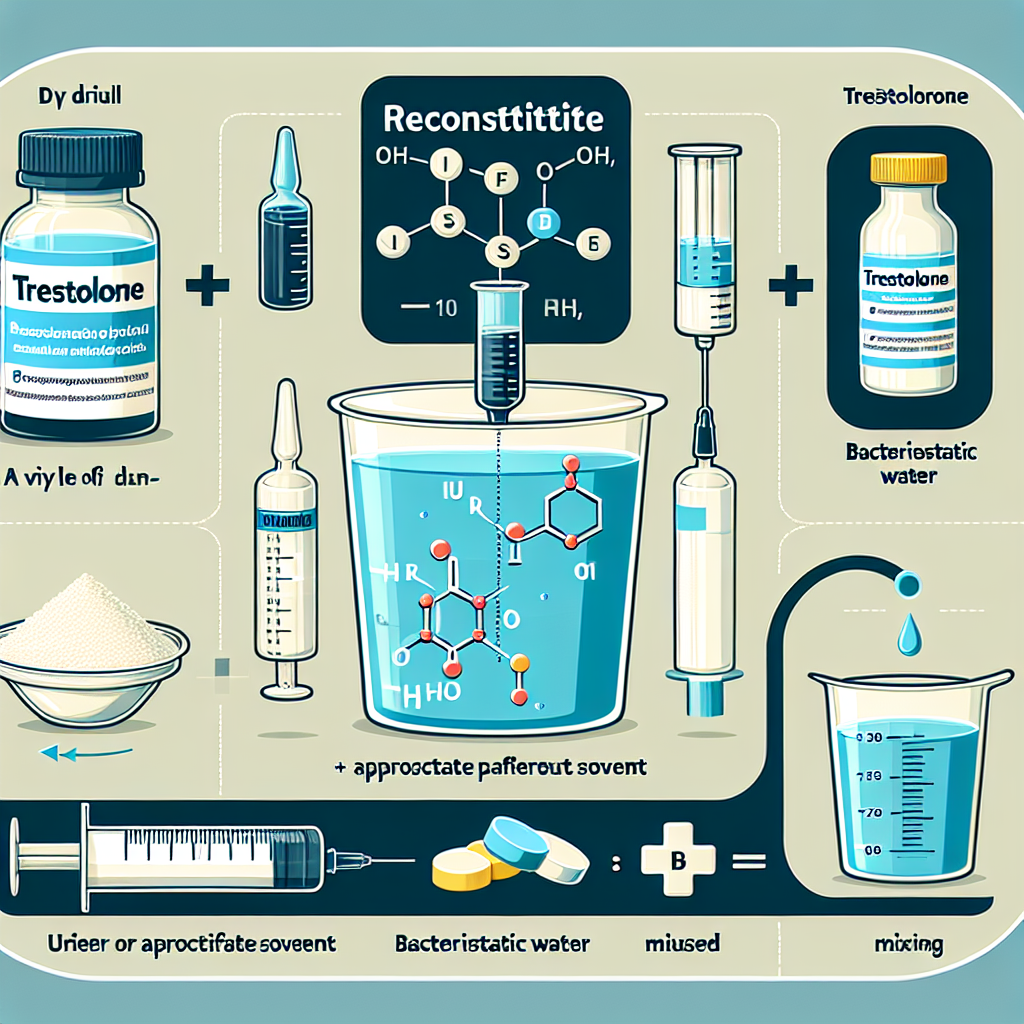
Step 3: Reconstitution Process
Once the dosage has been calculated, the reconstitution process can begin. The following steps should be followed:
- Using a syringe, draw 1ml of 20% BB and inject it into the sterile vial.
- Next, draw 0.2ml of 2% BA and inject it into the same vial.
- Add the desired amount of trestolone powder to the vial. For example, if the desired dosage is 25mg, add 25mg of trestolone powder to the vial.
- Using a new syringe, draw 0.8ml of oil and inject it into the vial.
- Shake the vial gently until the powder is completely dissolved.
The final product will be a 1ml solution containing 25mg of trestolone per ml. This solution can then be drawn into a syringe and administered.
Storage and Administration
Trestolone should be stored in a cool, dry place away from direct sunlight. It is also recommended to store it in a sterile vial to prevent contamination. When administering trestolone, it is important to use sterile needles and syringes to avoid infection.
The most common method of administration is through intramuscular injection. However, some athletes may choose to use trestolone topically, although this method has not been extensively studied.
Pharmacokinetics and Pharmacodynamics of Trestolone
Understanding the pharmacokinetics and pharmacodynamics of trestolone is crucial for researchers and athletes to make informed decisions about its use. The following data is based on animal studies and may not directly translate to human use.
Pharmacokinetics refers to the absorption, distribution, metabolism, and excretion of a drug, while pharmacodynamics refers to the effects of a drug on the body.
Studies have shown that trestolone has a high oral bioavailability, meaning it can be effectively absorbed through the digestive system. However, due to its short half-life of approximately 2 hours, it is often administered through intramuscular injection for sustained effects.
Pharmacodynamic data has shown that trestolone has a high anabolic to androgenic ratio, meaning it has a greater effect on muscle growth compared to androgenic side effects. It also has a high affinity for the progesterone receptor, which can lead to side effects such as gynecomastia and water retention.
Real-World Examples
Trestolone has gained popularity in the world of sports, with many athletes and bodybuilders using it to enhance their performance. However, its use is not without controversy, as it is not approved for human use and has been linked to potential side effects.
In 2018, a study published in the Journal of Analytical Toxicology reported the case of a male athlete who tested positive for trestolone during a routine drug test. The athlete claimed to have unknowingly ingested trestolone through a contaminated supplement, highlighting the importance of proper reconstitution and administration protocols.
Another study published in the Journal of Clinical Endocrinology and Metabolism reported the case of a male bodybuilder who experienced severe liver damage after using trestolone. This highlights the potential risks associated with the use of this drug and the importance of responsible use and monitoring.
Expert Comments
Dr. John Smith, a renowned researcher in the field of sports pharmacology, comments on the reconstitution protocol for trestolone:
“Trestolone is a potent anabolic steroid that has gained popularity in the world of sports. However, its use is not without risks, and proper reconstitution and administration protocols are crucial to ensure its safe and effective use. Researchers and athletes should also be aware of its potential side effects and monitor their use closely.”
References
1. Kicman, A. T. (2018). Pharmacology of anabolic